7 Lives of Music – The Kanneh-Mason Family

7 Lives of Music – The Kanneh-Mason Family

7 Lives of Music – The Kanneh-Mason Family

A film by Catharina Kleber, ZDF/3sat 2022, 60 min.

They are a family with seven children, each of them an exceptionally talented musician. The Kanneh-Mason siblings, their enormous success and their incredible energy team up to prove that classical music is not exclusively for those with fair skin and financial means. The documentary film “7 Lives of Music – The Kanneh-Mason Family” by Catharina Kleber provides moving, personal, and surprising glimpses into the private lives and the careers of this incredible family.

© Chris O'Donovan

It all started with Sheku: The winner of “BBC Young Musician 2016” was invited to play the cello during the Royal Wedding of Prince Harry and Meghan Markle. He became world-famous overnight and pulled his siblings into the spotlight along with him. The eldest of the seven is Isata. She plays the Schleswig-Holstein-Musikfestival while her sister Jeneba debuts at the Wigmore Hall in London with her brothers, as each of the siblings makes their way through the beginnings of promising careers that will lead them to the height of their fields. Along the way, they meet some of the current greats: Simon Rattle and Christoph Eschenbach, Daniel Hope and Thomas Hampson. Every step of their path is taken together, lifting each other up and showing the younger siblings and the world: If I can do it, so can you. With this attitude, all seven play the BBC Proms and record at the legendary Abbey Road Studios

You are currently viewing a placeholder content from Vimeo. To access the actual content, click the button below. Please note that doing so will share data with third-party providers.

More Information

Their parents are never far from their sides, but they aren’t the drill sergeants one has come to expect from families such as the Bachs, the Mozarts or the Jacksons. Kadie and Stuart are as surprised as anyone at their children’s talent and determination. They are able to support these qualities, without pushing them.

The film is a portrait of all of the family, with glimpses of their dreams and goals but also the barriers and worries along the way. It spotlights rehearsals in the living room, battles on the soccer pitch and glamorous concerts with equal interest. The Kanneh-Mason Family know first-hand how hard it is for people of color and from outside the inner circle to succeed in the world of classical music, but they prove beyond a doubt, that it may not remain that way.
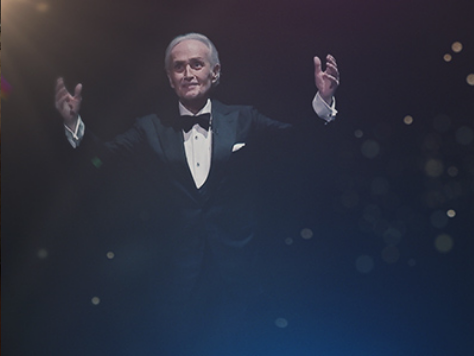
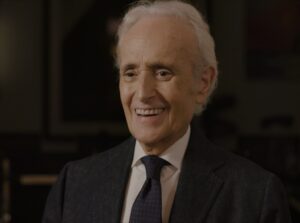
The Lucky Tenor – José Carreras turns 75

The Lucky Tenor – José Carreras turns 75

The Lucky Tenor – José Carreras turns 75

A film by Beatrix Conrad, BR/WDR/SWR and C Major Entertainment 2021, 45 min.

The private life of José Carreras was not always as glamorous and undiluted as his international career: his family was persecuted by the Franco regime, his mother dies of cancer when he was only 18, in the late 1980s he is diagnosed with leukemia. At that time a death sentence. Carreras takes on the fight and survives as one of the first patients to be treated with a bone marrow transplantation.

You are currently viewing a placeholder content from Vimeo. To access the actual content, click the button below. Please note that doing so will share data with third-party providers.

More Information

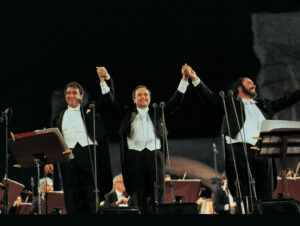
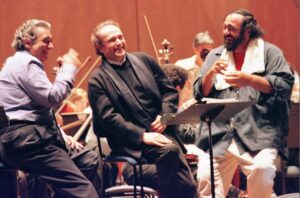
Especially the handling of tragic moments in his life reveals a lot about the human behind the opera star. He is a tireless warrior, a great communicator, and a merciless optimist. His energy is demonstrated not least in 1990 with the founding of the Three Tenors alongside Luciano Pavarotti and Placido Domingo. Shortly before their formation, Carreras was part of the first recording of Leonard Bernstein’s “West Side Story”, where he took on the lead role of Tony as the only Spanish person in the production.

The over 30 yearlong dedication for the José Carreras Leukemia Foundation is another proof of the indomitable nature of the Catalan: year after year he invites stars to his charity gala in Leipzig. Over 220 million euros have been donated to date – another impressive lifetime achievement.

The tenor gives a moving farewell concert at his second musical home: the Vienna Staatsoper. The audience expresses its gratitude with a standing ovation lasting for several minutes. Thank you and adieu to The Lucky Tenor.


The Carnival of the Animals – The Story of a Score

The Carnival of the Animals – The Story of a Score

The Carnival of the Animals – The Story of a Score

A film by Holger Preusse and Philipp Quiring, 52 min., WDR/ARTE 2021

Nominated for the Rose d’Or-Award 2021 in the Category„Arts“, as well as the Golden Prague Award 2021

You are currently viewing a placeholder content from Vimeo. To access the actual content, click the button below. Please note that doing so will share data with third-party providers.

More Information

Caricature

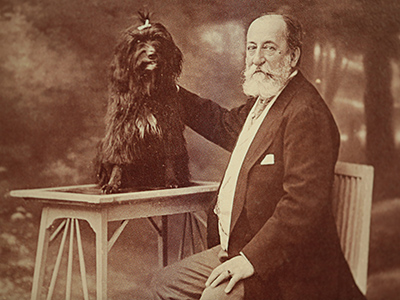
The “Carnival of the Animals” is his best known work. Camille Saint-Saëns never wanted to publish it during his lifetime. On the 100th anniversary of the composer’s death in December 2021, the music piece itself tells us how the dwindling act of birth occurred in the composer’s mind. It is the notes that tell us of its suffering and of its triumph on the great stages of the musical world.

According to the will of its creator, Camille Saint-Saëns’ “Carnival of the Animals” was to be performed only once, in March 1886, on Shrove Tuesday. And now this piece has stolen the show from Camille Saint-Saëns’ other works for a hundred years. Directors have brought Saint-Saëns’ music to Hollywood. At the Cannes International Film Festival, “The Aquarium” is the signature tune.

The film shows that “Carnival” is more than the musical characterization and exaggeration of various species. There are numerous contemporary historical and biographical references in “Carnival”, as revealed by Venezuelan pianist Gabriela Montero, French-Belgian cellist Camille Thomas, and U.S. organist and composer Cameron Carpenter.

For the documentary, musical notes were elaborately animated, telling us the story from the perspective of the piece of music. The role of the narrator was taken over by German actor Sebastian Koch. An orchestra specially assembled for the film lets the music of the “Carnival of the Animals” resound.

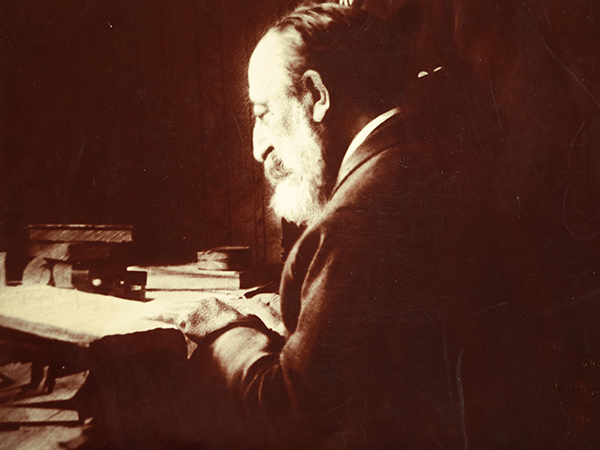
Camille Saint-Saens am Schreibtisch

48 Hours – The Järvi Family

48 Hours – The Järvi Family

48 Hours – The Järvi Family Die Järvis und ihr Musikfestival in Pärnu

A film by Isabel Hahn and Holger Preuße, 43 min. WDR/arte 2019

You are currently viewing a placeholder content from Vimeo. To access the actual content, click the button below. Please note that doing so will share data with third-party providers.

More Information

They are three star conductors and come from one family: Paavo, Kristjan and Neeme Järvi. Since 2011 they have been meeting every summer in the small Estonian port town of Pärnu on the Gulf of Riga to give concerts and hold workshops.

This year, the piece “Korale for 80” by Kristjan Järvi is one of the highlights of the Pärnu Music Festival. He composed it for his father Neeme’s 80th birthday. It will be conducted by Kristjan’s brother Paavo Järvi.

The festival in Pärnu also features world-famous artists. This year the exceptional Norwegian cellist Truls Mørk is among them.

Beethoven’s Ninth: Symphony for the World

Beethoven’s Ninth: Symphony for the World

Beethoven's Ninth: Symphony for the World

A film by Christian Berger, 90 min, Deutsche Welle, ZDF/arte

You are currently viewing a placeholder content from Vimeo. To access the actual content, click the button below. Please note that doing so will share data with third-party providers.

More Information

On the occasion of Ludwig van Beethoven’s 250th birthday (1770–1827), French-German broadcaster ARTE will be showing a 90-minute TV documentary about Beethoven’s Ninth Symphony on February 2, 2020.

No other work in symphonic literature has undergone such wide and enthusiastic reception. To this day, the most-played work of all time moves people all over the world.

The premiere on May 7, 1824 was a huge success. To the surprise of the audience, Beethoven had used a choir, a groundbreaking innovation never seen before at symphony concerts. With the chorus of Friedrich Schiller’s “Ode to Joy”, the Ninth Symphony carries the connecting power of people, of joy and freedom. It is music for eternity. Without hearing, Beethoven created a masterpiece that has not only come to be used as the official anthem of the European Union and listed in the world documentary heritage of the UNESCO, but which is also used in numerous feature films and pop hits.

The film follows the traces of the Ninth on four continents and looks at current interpretations. Filmmaker Christian Berger meets people whose lives are closely linked to Beethoven’s Ninth. “We were shooting in eight countries on four continents. Our protagonists spoke ten different languages, yet Beethoven was always sung in German. That was a big challenge,” says the director.

The protagonists of the seven film stories include (among others) Chinese composer and Oscar winner Tan Dun, British composer Gabriel Prokofiev, Greek star conductor Teodor Currentzis and Paul Whittaker (OBE) and his work with hearing-impaired children with the Mahler Chamber Orchestra (MCO).

Beethoven’s Ninth wins the “Deutscher Kamerapreis” in the category Montage (Documentary) as well as the Award for Best Documentary at the 2020 International Christian Film and Music Festival

Supported by