Anastasia Kobekina | Now or Never!

Anastasia Kobekina | Now or Never!

Anastasia Kobekina: Now or Never!

A film by Grete Liffers & Sophie-Caroline Danner, 52 min, C Major & Sony
Trailer

Many share the dream of a global career – but what does it truly take to make that dream a reality? Following the charismatic cellist Anastasia Kobekina, the documentary offers a unique look behind the closed doors of her record label, concert halls, and her private life. Having started to play the cello at age four, Anastasia struggles with the decisions made for her and those she must make when asking herself: “Is it my choice or the choice of my parents?” Torn between her own and other people’s expectations, Anastasia forges her path through a demanding industry and inspires by proving her ambition, talent, and resilience.

Celebrating Christmas

Celebrating Christmas

Celebrating Christmas | With Benjamin Appl, Elsa Dreisig and the Regensburger Domspatzen

Director: Beatrix Conrad, 65 min

A dream will be coming true for star singer Benjamin Appl. As a young boy, he learned to sing as one of the ‘Cathedral Sparrows’ – the celebrated Regensburg Boys’ Choir. Now, together with soprano Elsa Dreisig and 60 of the Sparrows, he invites the audience to the beautiful Old Chapel in Regensburg to sing popular Christmas carols from Germany, France, England and Sweden.

It promises to be a diverse and international festive programme, and the perfect way to usher in the tranquil Christmas season. Bavaria’s most distinguished Rococo church will resound with the beloved melodies of Cornelius and Mendelssohn as well as traditional Christmas carols including ‘Silent Night, Holy Night’, ‘Christmas Lullaby’ and ‘Petit Papa Noël’.

Richard Strauss in the Twilight | The composer and the Third Reich

Richard Strauss in the Twilight | The composer and the Third Reich

Richard Strauss in the Twilight | The composer and the Third Reich

A film by Holger Preuße and Philipp Quiring, 52 min, BR/ARTE, SRF 2024

Richard Strauss remains a luminous figure to this day. The composer set standards with his operas, songs and symphonic poems. He fascinates people with his magical sense of sound. But his radiant aura is overshadowed by darkness. Who is he on the one side, who is he on the other? What are the connecting dots between them? It is a life full of contradictions.

Vimeo

Mit dem Laden des Videos akzeptieren Sie die Datenschutzerklärung von Vimeo.
Mehr erfahren

Video laden

The film shows motifs and shades and reveals the complexity of the musician and the man Richard Strauss. What drove Richard Strauss and what did he actually stand for? At the beginning of the Third Reich, Richard Strauss was president of the Reich Chamber of Music, but eventually resigned from office on the strong recommendation of propaganda minister Joseph Goebbels after a letter was intercepted in which he stated that he was merely ‘miming’ the president. At the same time, Strauss was and remained the protector of the Jewish part of his family. However, more than 25 relatives were murdered by the National Socialists. He, by now an old man, was powerless.

The focus on Strauss today is sharpened when the renaming of streets or parks is discussed. Even if this happens detached from his brilliant music, his contradictions and ambiguities during the Nazi era remain.

Klang der Alpen

Klang der Alpen

Klang der Alpen

Ein Film von Elke Sasse und Pascal Capitolin, 90 min, tba

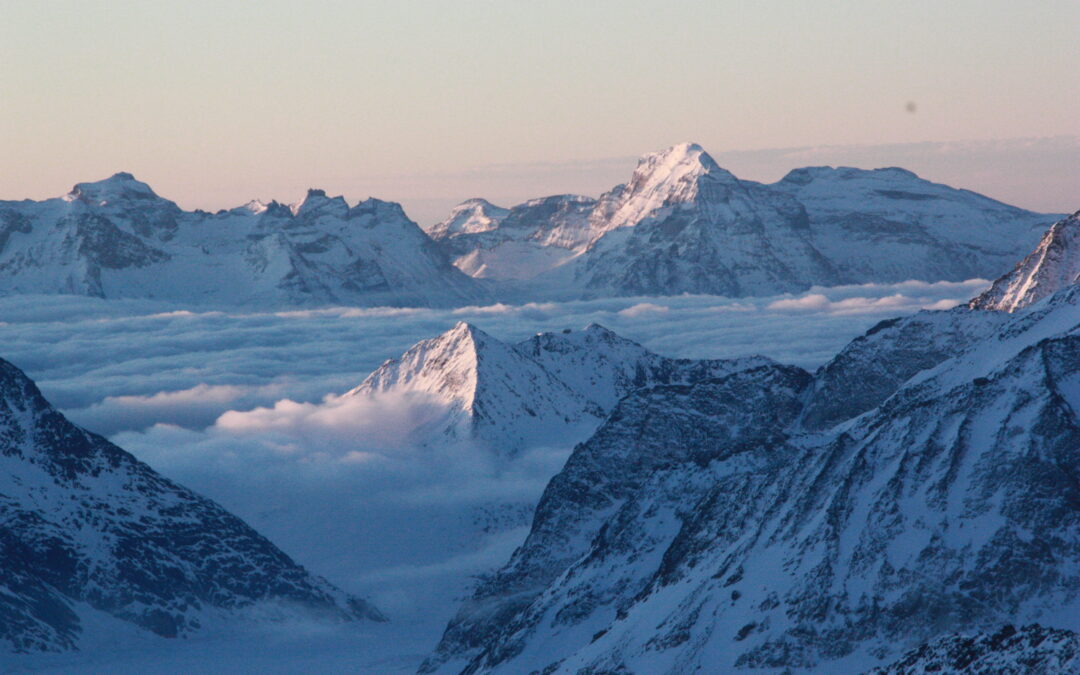
DER KLANG DER ALPEN ist eine immersive Reise durch eine der schönsten und imposantesten Berglandschaften Europas. Eine Begegnung mit besonderen Menschen und nie gehörten Klängen. Eine „Anstiftung zum Hören“, die das Sehen verändert und es ermöglicht, die Bergwelt der Alpen jenseits unserer Sehnsüchte und Projektionen neu zu erleben.

Der Film folgt einer Bewegung vom Tal hinauf in Richtung Gipfel – durch Wälder, über Wiesen, durch eine Höhle, die Felslandschaften oberhalb der Baumgrenze, über einen Gletscher. Dabei nähern wir uns der Bergwelt über unsere Ohren. Wir begegnen Menschen, die unsere Sinne schärfen für ihre ganz besonderen Klangwelten. Sie nehmen uns mit und öffnen Ohren – und Augen. Wir tauchen mittels immersiver Tontechnik in ihre „Wunderwelten“ ein und lassen uns berühren. Wir hören den Alpen zu, dechiffrieren ihre Botschaften.

Wir erleben die Bergwelt als Suchende, nicht als Bezwingende. Wir sind nur Zuhörende. So lösen sich Gewissheiten auf und Töne dekonstruieren Postkartenmotive. Wir hören und wir sehen wie neu. 

Wir begegnen den Alpen nicht als Objekt, nicht als Ressource, Kulisse oder Projektionsfläche. Und werden so Zeugen einer großen Transformation. Wir erleben Schönheit, Verletzbarkeit – und Zerstörung: Kaum ein Ort ohne die Tonspur des Menschen, die vertrocknenden Wälder seufzen, der Klang der im Schmelzen platzenden Luftblasen im ewigen Eis ist die Tonspur des Klimawandels.

Doch wir erstarren nicht in Hoffnungslosigkeit, denn das Hören ermöglicht uns eine andere Art der Begegnung. Töne sind persönlich und emotional. Über sie erfahren wir eine wiedergefundene Verbindung – zu dieser einzigartigen Welt in Gefahr.

Mischa Maisky | A Man and his Cello

Mischa Maisky | A Man and his Cello

Mischa Maisky | A Man and his Cello

A film by Beatrix Conrad & Lily Küntzle, 52 min, NDR/ARTE 2024

“After 50 years on stage, there are still many challenges, dreams, and ambitions for the next 50 years,” Mischa Maisky says with a twinkle in his eye. The 75-year-old star cellist, together with the Deutsche Kammerphilharmonie Bremen under the baton of Paavo Järvi, demonstrates that he can still play like a “hot-blooded youngster” (Hamburger Abendblatt).

“My most important life motto: Perfection is the enemy of good.” For Mischa Maisky, the cello is not a means to demonstrate technical skill. For him, it’s not about perfection, but rather about conveying emotions to his audience as unfiltered as possible in the moment of interpretation. This emotional connection with the audience is intensely felt in the concert in Kiel with his long-time friend, the pianist Martha Argerich, and the violinist Janine Jansen. And even though Mischa Maisky still has many wishes and dreams for the future, he has already fulfilled one heart’s desire: he goes on concert tours as a family trio together with his children Sascha (violin) and Lily (piano).

Tchaikovsky’s Rococo Variations allow the cellist to indulge his virtuosity to the fullest. With Tchaikovsky’s “Nocturne” and the cello adaptation of the Lensky aria “Kuda, Kuda,” Maisky demonstrates his romantic, expressive playing without slipping into kitsch. Max Bruch’s “Kol Nidrei” awakens memories of his origins. Maisky grew up in a Jewish family with Ukrainian roots in the former Soviet Union, began playing the cello at the age of 8, and received his education from two of the greatest masters of the cello: Mstislav Rostropovich and Gregor Piatigorsky. Through several disruptions in his life – his father died when he was 18, his sister emigrated shortly after, and he himself spent 2 years in a labor camp – Maisky developed a special sensitivity that can be heard in his playing. He sees his unusual life story as an important education and is grateful for this “comprehensive life experience.”