Celebrating Christmas

Celebrating Christmas

Celebrating Christmas | With Benjamin Appl, Elsa Dreisig and the Regensburger Domspatzen

Director: Beatrix Conrad, 65 min

A dream will be coming true for star singer Benjamin Appl. As a young boy, he learned to sing as one of the ‘Cathedral Sparrows’ – the celebrated Regensburg Boys’ Choir. Now, together with soprano Elsa Dreisig and 60 of the Sparrows, he invites the audience to the beautiful Old Chapel in Regensburg to sing popular Christmas carols from Germany, France, England and Sweden.

It promises to be a diverse and international festive programme, and the perfect way to usher in the tranquil Christmas season. Bavaria’s most distinguished Rococo church will resound with the beloved melodies of Cornelius and Mendelssohn as well as traditional Christmas carols including ‘Silent Night, Holy Night’, ‘Christmas Lullaby’ and ‘Petit Papa Noël’.

Mischa Maisky | A Man and his Cello

Mischa Maisky | A Man and his Cello

Mischa Maisky | A Man and his Cello

A film by Beatrix Conrad & Lily Küntzle, 52 min, NDR/ARTE 2024

“After 50 years on stage, there are still many challenges, dreams, and ambitions for the next 50 years,” Mischa Maisky says with a twinkle in his eye. The 75-year-old star cellist, together with the Deutsche Kammerphilharmonie Bremen under the baton of Paavo Järvi, demonstrates that he can still play like a “hot-blooded youngster” (Hamburger Abendblatt).

“My most important life motto: Perfection is the enemy of good.” For Mischa Maisky, the cello is not a means to demonstrate technical skill. For him, it’s not about perfection, but rather about conveying emotions to his audience as unfiltered as possible in the moment of interpretation. This emotional connection with the audience is intensely felt in the concert in Kiel with his long-time friend, the pianist Martha Argerich, and the violinist Janine Jansen. And even though Mischa Maisky still has many wishes and dreams for the future, he has already fulfilled one heart’s desire: he goes on concert tours as a family trio together with his children Sascha (violin) and Lily (piano).

Tchaikovsky’s Rococo Variations allow the cellist to indulge his virtuosity to the fullest. With Tchaikovsky’s “Nocturne” and the cello adaptation of the Lensky aria “Kuda, Kuda,” Maisky demonstrates his romantic, expressive playing without slipping into kitsch. Max Bruch’s “Kol Nidrei” awakens memories of his origins. Maisky grew up in a Jewish family with Ukrainian roots in the former Soviet Union, began playing the cello at the age of 8, and received his education from two of the greatest masters of the cello: Mstislav Rostropovich and Gregor Piatigorsky. Through several disruptions in his life – his father died when he was 18, his sister emigrated shortly after, and he himself spent 2 years in a labor camp – Maisky developed a special sensitivity that can be heard in his playing. He sees his unusual life story as an important education and is grateful for this “comprehensive life experience.”

Cristian Măcelaru and Brahms in Timișoara

Cristian Măcelaru and Brahms in Timișoara

Cristian Măcelaru and Brahms in Timișoara

A film by Claus Wischmann, 43 min, WDR/ARTE 2023

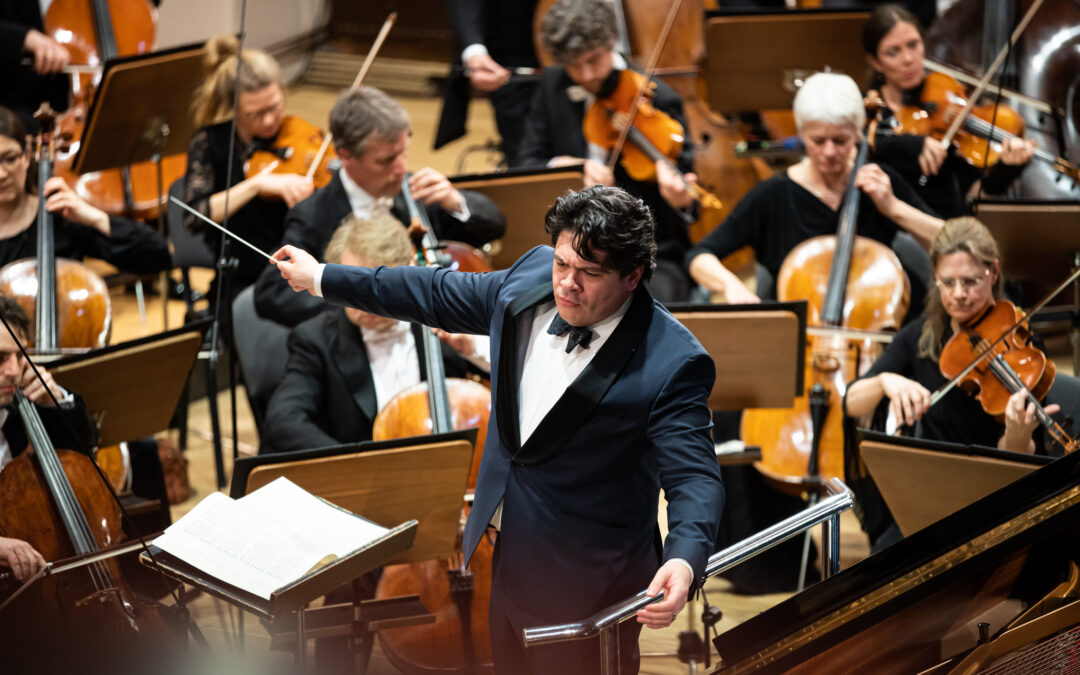
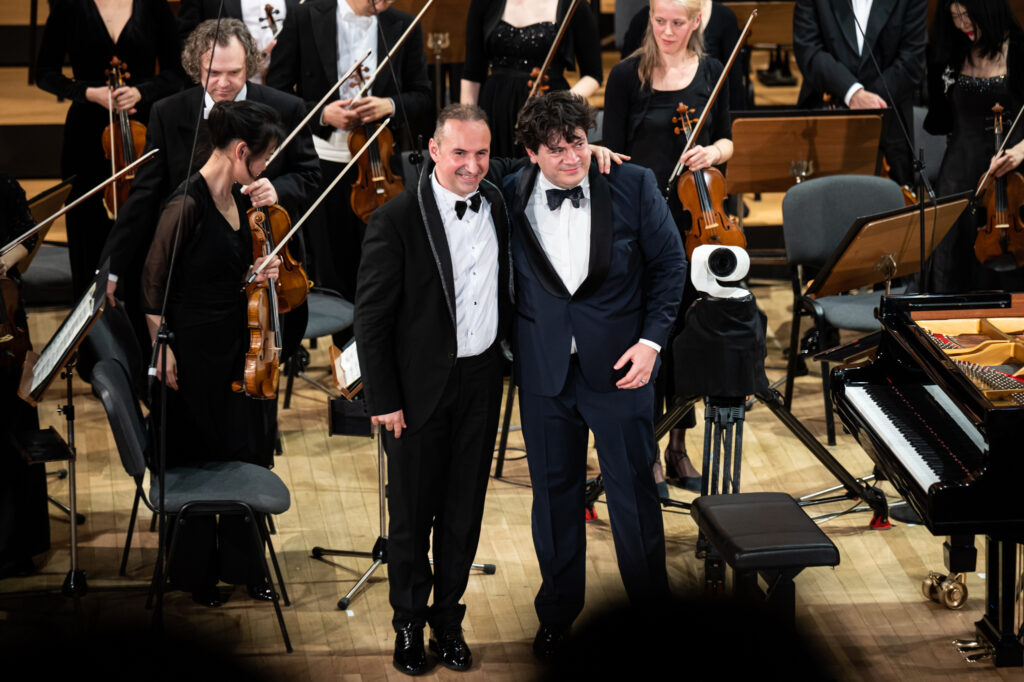
For Cristian Măcelaru, it’s special playing in front of a home crowd. The Chief Conductor of the WDR Symphony Orchestra is travelling with his orchestra to the European Capital of Culture 2023. Cristian grew up in Timișoara, Romania, as the youngest of ten children. Now he is returning as a star. Together with the orchestra and pianist Simon Trpčeski, they will perform Johannes Brahms’ Piano Concerto No. 2.

Cristian Măcelaru left Romania at the age of just seventeen to seek success in the USA and Europe. It wasn’t long before he made a name for himself as a violinist and conductor. Since 2020, he has been Music Director of the Orchestre National de France and Chief Conductor of the WDR Symphony Orchestra. In this music documentary, we follow Măcelaru as he returns to Timișoara in Romania, accompanied by his orchestra from Cologne. The programme includes the Second Piano Concerto by Johannes Brahms. As pianist, Măcelaru has chosen the celebrated Simon Trpčeski, who is also a friend and companion.

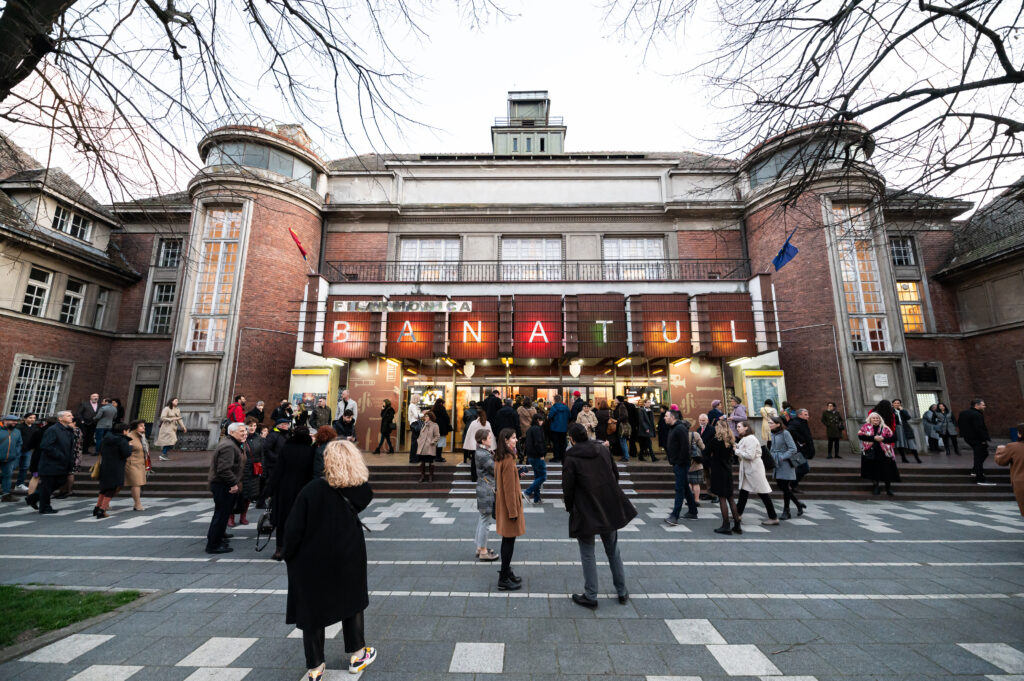
Timișoara is situated close to Hungary. The third largest city in Romania is a cultural melting pot with striking architecture that has earned it the nickname of “Little Vienna”. Cristian Măcelaru grew up here as the youngest of ten children, each of whom had to learn an instrument with the aim of bolstering their father’s church orchestra. “We all played an instrument – one the violin, another the cello. My mother played the flute and we all sang. It was a genuine cacophony.”

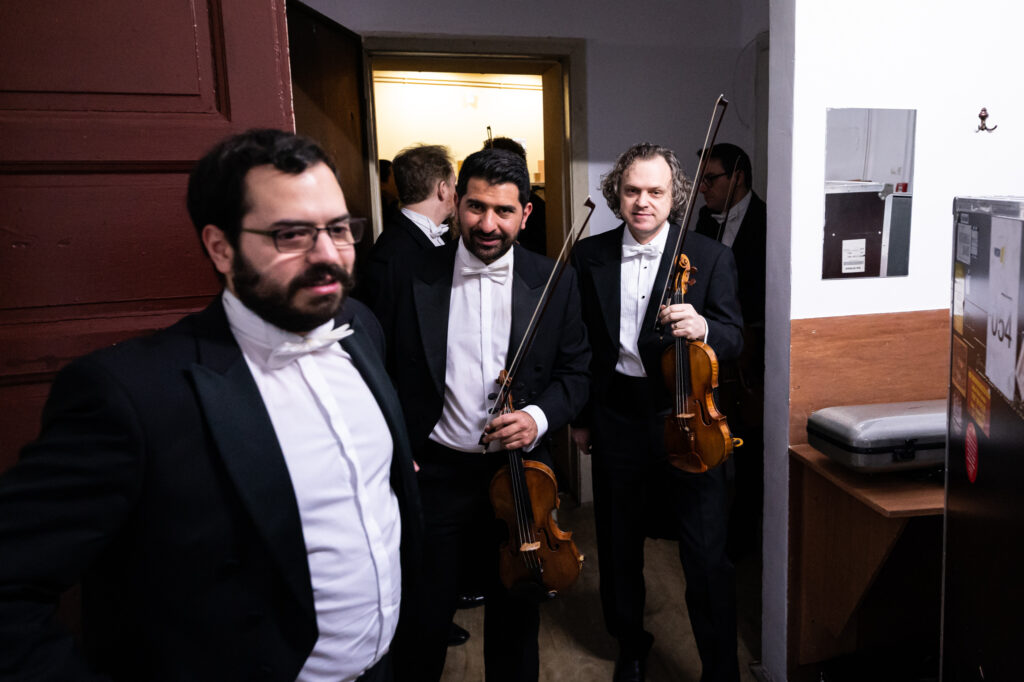
The film accompanies Cristian Măcelaru, horn player Melanie Pschorr and pianist Simon Trpčeski during their rehearsals and in the concert. The Timișoara Philharmonic Hall is a former cinema and is barely capable of hosting an eighty-person orchestra, creating a challenge for the orchestra attendants, musicians and conductor.

During a personal tour of the city, Cristian Măcelaru recounts the moving story of the Romanian revolution, which had its origins in Timișoara. We also experience the international star conductor as a private person together with his extended family as he celebrates his birthday, visits the most beautiful places in the city and tells rich tales of revolutions and the casualties of history.

On tour with Mozart  | Felix Klieser and the Bournemouth Symphony Orchestra

On tour with Mozart | Felix Klieser and the Bournemouth Symphony Orchestra

On tour with Mozart | Felix Klieser and the Bournemouth Symphony Orchestra

A film by Beatrix Conrad, WDR/ARTE, 43 min, 2022

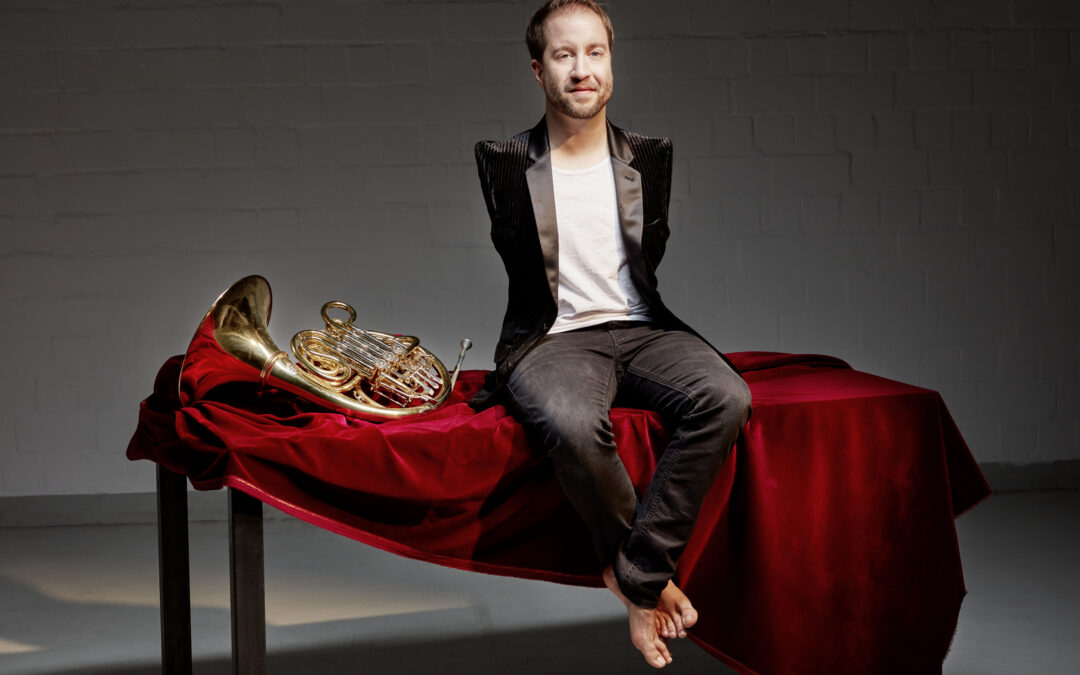
Felix Klieser has played the horn for 27 years – without arms. At the tender age of nine, he dreamed of playing Mozart’s horn concertos. Today, he performs these pieces in concert halls large and small in the south of England together with the Bournemouth Symphony Orchestra. He is the first German horn player to be appointed the orchestra’s artist in residence.

While the four Mozart horn concertos are in every bugler’s repertoire, Klieser has waited a long time to record the cherished works. In September 2018, after three successful albums that garnered him an ECHO Klassik and Leonard Bernstein award, he headed to Salzburg to finally record all four of Mozart’s horn concertos with the famous Camerata Salzburg ensemble. Klieser’s rehearsals for the Horn Concerto No. 4 in E-flat major, K. 495, began in 2022 in Poole. The town is the headquarters of the Bournemouth Symphony Orchestra, a touring orchestra that plays in concert halls across the south and southwest of England. The next stop on the tour for Felix Klieser is Plymouth.

Vimeo

Mit dem Laden des Videos akzeptieren Sie die Datenschutzerklärung von Vimeo.
Mehr erfahren

Video laden

The days are tightly scheduled for the orchestra and above all for its soloist. Alongside rehearsals and concerts, there’s also an interview with the BBC in London and a school visit in Plymouth, punctuated by long car journeys that allow for a few moments of relaxation. Finally, a quick stop at the Formula 1 circuit in Silverstone – Felix Klieser loves fast cars. Speed, rhythm, precision are skills that both musicians and racers need to be successful.

Soul of Sound – One year at the Karajan Academy

Soul of Sound – One year at the Karajan Academy

Soul of Sound – One year at the Karajan Academy

A film by Isabel Hahn & Silvia Palmigiano, ZDF/arte, 52 min, 2022
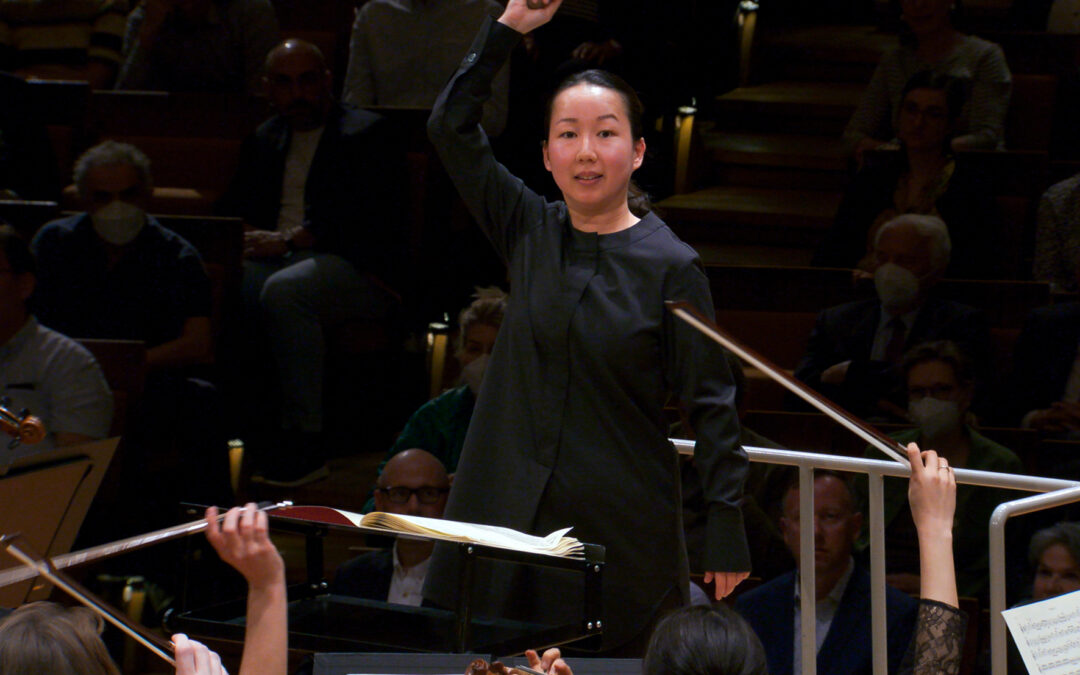
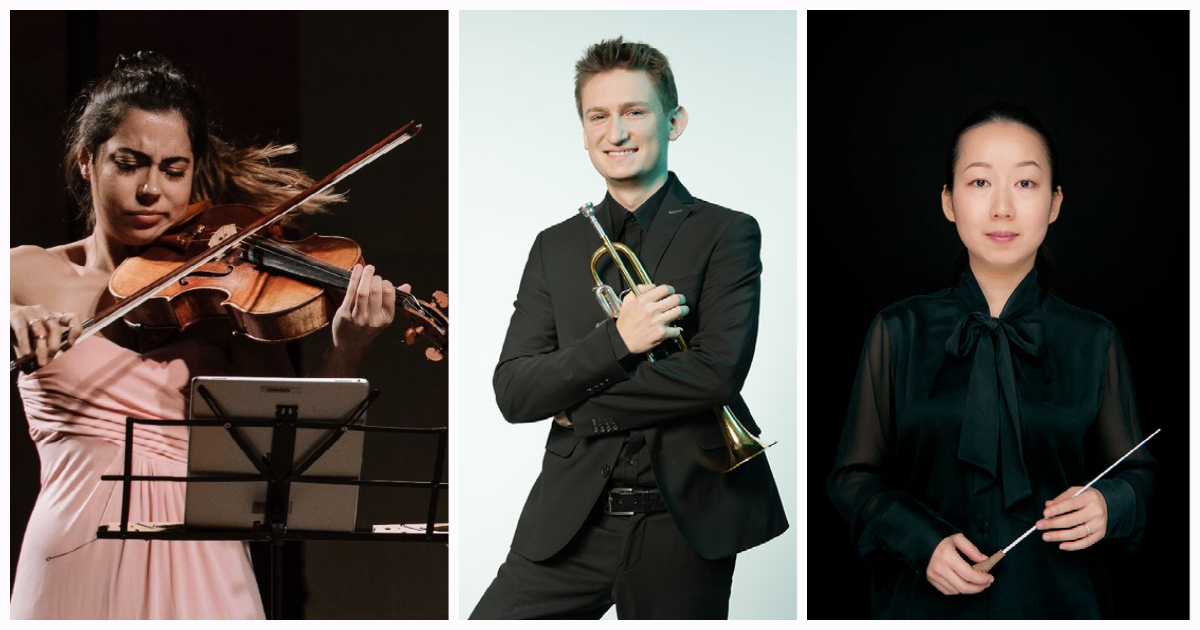
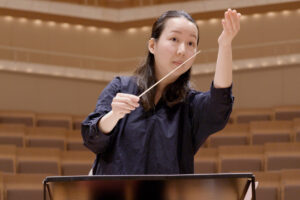
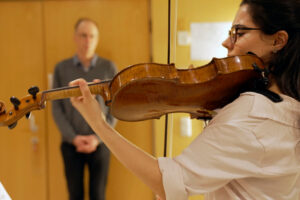
Nodoka Okisawa, Sara Ferrández and Lennard Czakaj are 3 out of 30 musicians who have landed a coveted place at the Karajan Academy, the training school associated with the Berlin Philharmonic. This means lessons and concerts with one of the best orchestras in the world. But it also means great expectations and a lot of pressure.

Violist Sara dreams of a solo career and is working on her YouTube channel. She wants to give young people an understanding of classical music. She wants to break taboos – since there are too many conventions in classical music that don’t make sense to her. Trumpeter Lennard does not come from a family of musicians. He got his first trumpet from his parents when he was eight years old. At the time he had a guilty conscience because he knew that the instrument was very expensive. Since then he ha sputs all his eggs in one basket and is hoping for a position in the orchestra. He doesn’t have a plan B. Nodoka is expecting a baby. She is again confronted with something that, in her opinion, has no place in music: A female conductor is not always accepted, especially a pregnant one… But then on the podium she forgets everything – and levitates…